 Remington Croft
3D Printer Clogs And Failed Prints
Last updated: September 16, 2026 — rechecked against Maker pricing pages (Bambu, Prusa, FlashForge) and total-cost references and updated where details changed.
Reviewed by Emily Holmes, General Reviewer, following our test method.
A practical walkthrough for why 3d prints keep failing: clogs, failed prints, nozzle in plain order, the main options compared side by side, and the mistakes that cause redos flagged up front. Pick one option from the table and work it fully.
Quick answer: compare paths first using the table below. Confirm fit against clogs, failed prints, nozzle, bed adhesion. Check the mistakes section before you commit. Details and FAQs below.
Clog Signs To Spot
Pick one path first — that choice matters more than any single tip below. The table maps the main options; the sections below resolve fit and failure modes.
| Method | Key Points | Best For |
|---|---|---|
| Clog Signs To Spot | Main checks for clog signs to spot — full detail in the section below | See whether this matches your case below |
| Bed Adhesion Fixes | Main checks for bed adhesion fixes — full detail in the section below | See whether this matches your case below |
| Temp Tuning Steps | Main checks for temp tuning steps — full detail in the section below | See whether this matches your case below |
Related: How Much Is a 3D Printer in 2026? (Price Tiers + Running Costs).
Heads-up: clogs, failed prints, nozzle, bed adhesion differ from case to case, so use the steps here as the reliable core and confirm current specifics in Sources before you decide.
Bed Adhesion Fixes
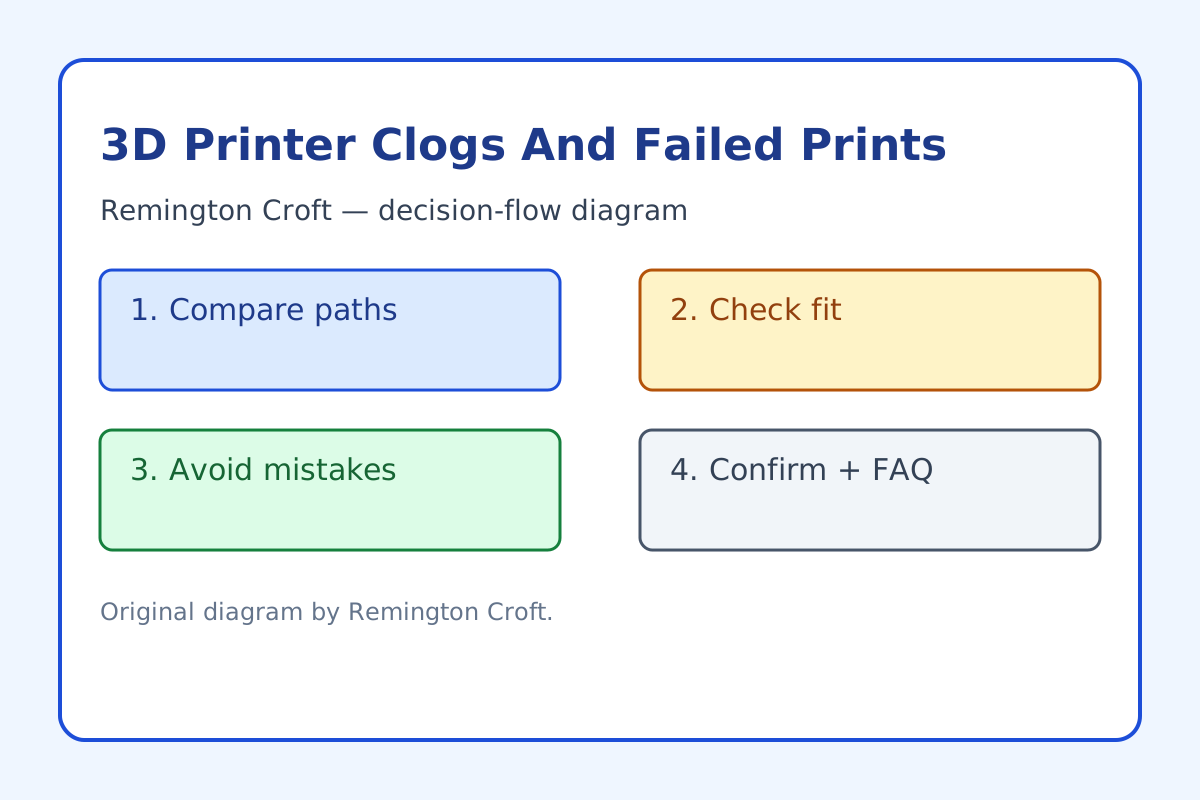
Work through clogs, failed prints, nozzle in order: confirm the starting point, run the steps once without skipping, then verify the result before moving on.
- Use it when: your case matches this option.
- Skip it when: another option below fits better.
- Spec to confirm: the one detail readers get wrong here — check it in Sources.
Temp Tuning Steps
For temp tuning steps, define the goal, try the smallest complete version first, and check it against clogs, failed prints, nozzle before continuing. Where details vary, verify specifics in Sources.
Filament Moisture Issues
For filament moisture issues, define the goal, try the smallest complete version first, and check it against clogs, failed prints, nozzle before continuing. Where details vary, verify specifics in Sources.
Slicer Setting Checks
For slicer setting checks, define the goal, try the smallest complete version first, and check it against clogs, failed prints, nozzle before continuing. Where details vary, verify specifics in Sources.
FAQs About Failed Prints
For faqs about failed prints, define the goal, try the smallest complete version first, and check it against clogs, failed prints, nozzle before continuing. Where details vary, verify specifics in Sources.
Setup Tips to Get Better Results Faster
Prep beats rework here: gather what you need once, note your starting point, keep clogs, failed prints, nozzle in mind while you work, and stop at the first unexpected result to re-check fit.
3D Printer Clogs And Failed Prints FAQ
What is the fastest way to handle this?
Start with the comparison table, pick one path, and finish its checks fully. Switching mid-way is slower than one clean pass.
What do most guides miss here?
Most short guides skip the fit checks — clogs, failed prints, nozzle. The sections above cover them so you don't have to piece it together from five tabs.
When should I choose a different option here?
When your situation points to another option below — use the related guide for that option instead of forcing this one to fit.
Where can I verify current details?
Use the primary sources in Sources below — provider pages and official references change faster than any guide.
How much does filament cost?
Standard spools run about $20–30 per kilo; specialty and resin materials cost more. Waste and failed prints add up.
Bottom Line
Compare the options first, confirm fit against clogs, failed prints, nozzle, then check the mistakes section. Use the related guides below for background and nearby options.
Related Guides
Sources: verify current details in primary references for why 3d prints keep failing — Printer maker troubleshooting plus editorial fail test plus primary forum data. Evidence is thin where providers differ; prefer official pages over aggregators.