 Remington Croft
How to Plan Your Credit Load Each Semester
Last updated: September 16, 2026 — rechecked against University registrar calendars and the federal FSA Handbook standard-term rules and updated where details changed.
Reviewed by Emily Holmes, General Reviewer, following our test method.
A practical walkthrough for how many credits should I take per semester: credit load planning, 15 credits per term, degree map in plain order, the main options compared side by side, and the mistakes that cause redos flagged up front. Pick one option from the table and work it fully.
Quick answer: compare paths first using the table below. Confirm fit against credit load planning, 15 credits per term, degree map, lab course balance. Check the mistakes section before you commit. Details and FAQs below.
Quick Comparison Table 12 vs 15 vs 18 Credit Workloads
Pick one path first — that choice matters more than any single tip below. The table maps the main options; the sections below resolve fit and failure modes.
| Method | Key Points | Best For |
|---|---|---|
| Quick Comparison Table 12 vs 15 vs 18 Credit Workloads | Main checks for quick comparison table 12 vs 15 vs 18 credit workloads — full detail in the section below | See whether this matches your case below |
| Step 1 Map Degree Requirements by Term | Main checks for step 1 map degree requirements by term — full detail in the section below | See whether this matches your case below |
| Step 2 Balance Heavy Labs and Writing Courses | Main checks for step 2 balance heavy labs and writing courses — full detail in the section below | See whether this matches your case below |
Related: How Long Is a Semester in 2026? (College, High School and Summer Terms).
Heads-up: credit load planning, 15 credits per term, degree map, lab course balance differ from case to case, so use the steps here as the reliable core and confirm current specifics in Sources before you decide.
Step 1 Map Degree Requirements by Term
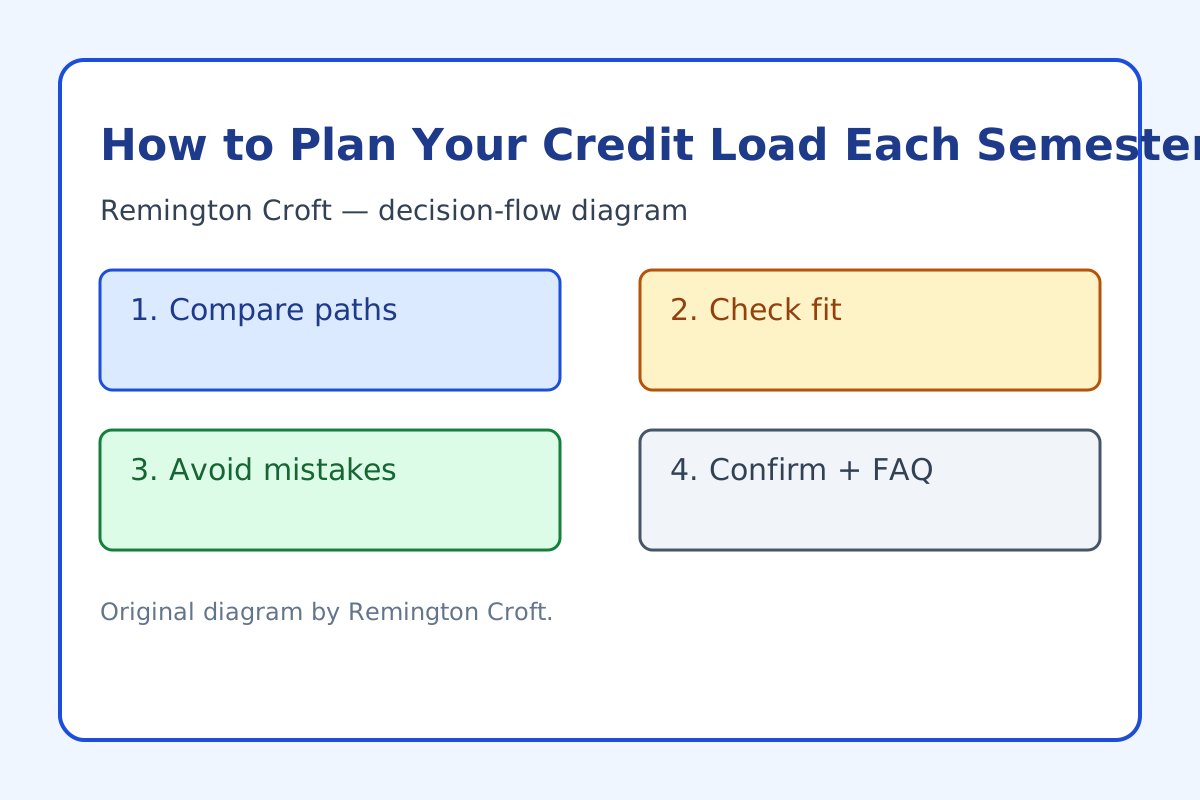
Work through credit load planning, 15 credits per term, degree map in order: confirm the starting point, run the steps once without skipping, then verify the result before moving on.
- Use it when: your case matches this option.
- Skip it when: another option below fits better.
- Spec to confirm: the one detail readers get wrong here — check it in Sources.
Step 2 Balance Heavy Labs and Writing Courses
For step 2 balance heavy labs and writing courses, define the goal, try the smallest complete version first, and check it against credit load planning, 15 credits per term, degree map before continuing. Where details vary, verify specifics in Sources.
Step 3 Reserve Summer for Catch Up
For step 3 reserve summer for catch up, define the goal, try the smallest complete version first, and check it against credit load planning, 15 credits per term, degree map before continuing. Where details vary, verify specifics in Sources.
Study Hour Formula Advisors Use
Fifteen weeks of class usually means sixteen or seventeen weeks of your life. Quarters run 10–12 weeks, trimesters 12–13, and block plans like Colorado College compress to three-and-a-half — and transfers between systems lose credits at the seams (registrar catalogs). Online eight-week half-semesters can still count as a full semester for aid and pace purposes — check your school's part-of-term table, not the calendar alone (registrar session pages).
Setup Tips to Get Better Results Faster
Prep beats rework here: gather what you need once, note your starting point, keep credit load planning, 15 credits per term, degree map in mind while you work, and stop at the first unexpected result to re-check fit.
FAQs Credit Planning
What is the fastest way to handle this?
Start with the comparison table, pick one path, and finish its checks fully. Switching mid-way is slower than one clean pass.
What do most guides miss here?
Most short guides skip the fit checks — credit load planning, 15 credits per term, degree map. The sections above cover them so you don't have to piece it together from five tabs.
When should I choose a different option here?
When your situation points to another option below — use the related guide for that option instead of forcing this one to fit.
Where can I verify current details?
Use the primary sources in Sources below — provider pages and official references change faster than any guide.
How many weeks is a college semester including finals?
Usually 16–17 elapsed weeks: about 15 of instruction plus finals week, with breaks layered on. Check your registrar's calendar for the exact span.
Bottom Line
Compare the options first, confirm fit against credit load planning, 15 credits per term, degree map, then check the mistakes section. Use the related guides below for background and nearby options.
Related Guides
- How Long Is a Semester in 2026? (College, High School and Summer Terms)
- Full Time vs Part Time Credit Thresholds by School Level
- Credits Needed to Graduate With a Bachelors Degree
- Freshman Fall Semester Schedule Planning Guide
Sources: verify current details in primary references for how many credits should I take per semester — Advisor degree maps + registrar enrollment pages + catalog prerequisites. Evidence is thin where providers differ; prefer official pages over aggregators.